
Sustainable food systems are not built by projects alone. They are built by people individuals within communities who have the knowledge, confidence, and connections to inspire change, champion innovation, and create opportunities for others.
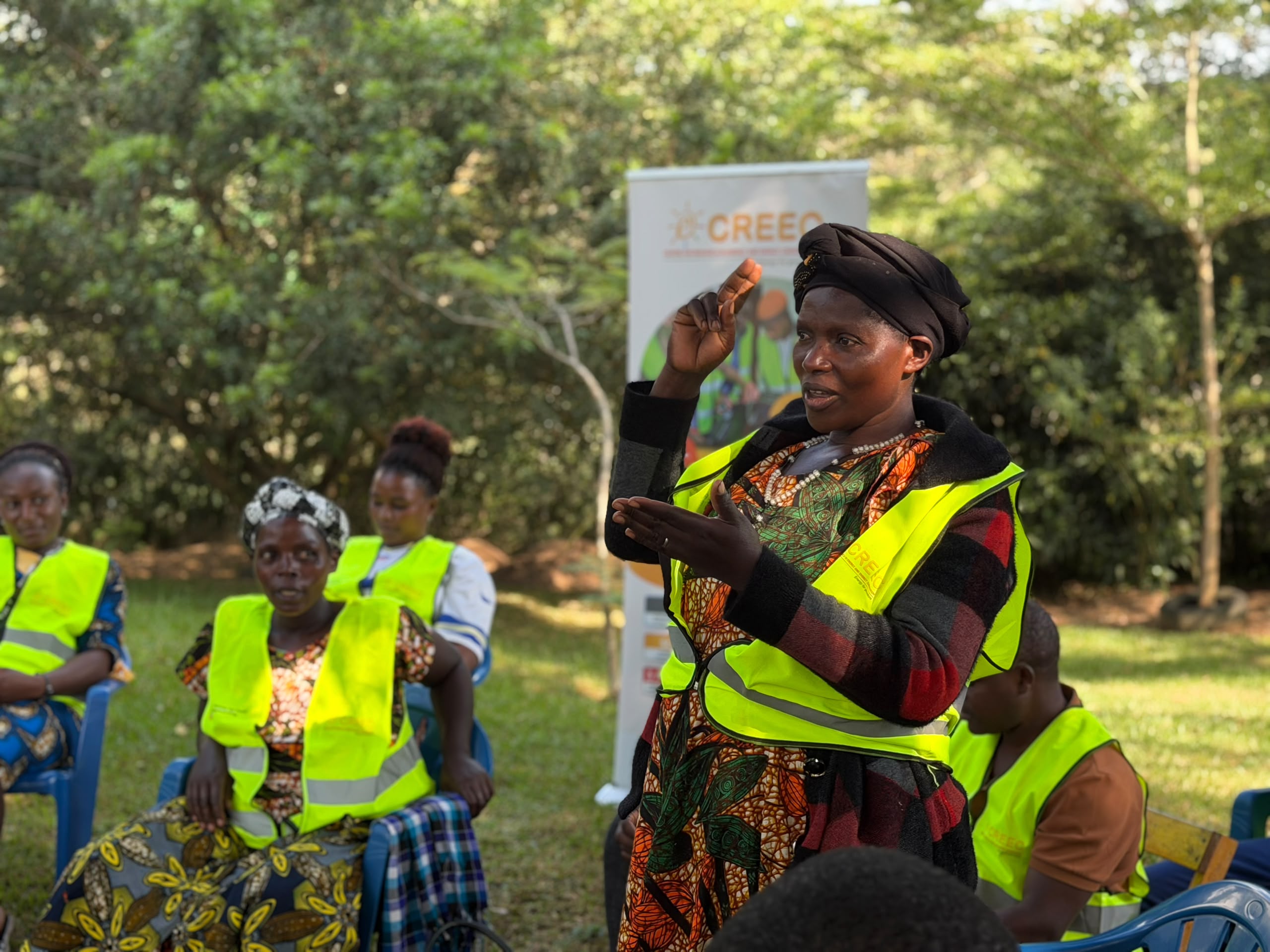
Last week in Mubende, the Centre for Research in Energy and Energy Conservation (CREEC) took an important step towards strengthening this local leadership through a Women and Youth Champion Development and Capacity Strengthening Engagement under the SNV-led Power for Food Partnership (PFFP).
Hosted at Homeland Organics, the engagement brought together 21 women and youth champions alongside local government leaders, SACCO representatives, and other community stakeholders. The activity built on findings from the Mapping and Assessment of Women and Youth Networks conducted to support the integration of innovations and RA-PURE approaches within local food systems.
The engagement provided a platform to share and validate assessment findings while generating additional insights into the opportunities and challenges facing women and youth networks. Beyond validating the findings, the discussions created space for meaningful dialogue on how local champions can support the integration and adoption of innovations and RA-PURE solutions within their communities.
A central focus of the engagement was strengthening participants not only as adopters of innovation but as facilitators of change. Champions were encouraged to see themselves as connectors, mobilizers, and influencers capable of fostering collaboration, facilitating knowledge sharing, and supporting the uptake of practical solutions that improve livelihoods and strengthen food systems.
Through interactive discussions, practical demonstrations, peer-to-peer learning, and reflection sessions, participants explored innovation and enterprise models while exchanging experiences from their own communities. These conversations highlighted the critical role of local leadership in driving sustainable development and underscored the importance of continuous learning, collaboration, and partnership building.
The engagement also benefited from valuable experiential learning opportunities at Homeland Organics, which served as a learning site for participants. We are grateful to ACSA, our partner in the Power for Food Partnership, for their collaboration and support in identifying the site and creating an environment where participants could learn directly from practical examples and real-world experiences.
One of the most encouraging outcomes of the engagement was the strong commitment expressed by participants to remain actively involved in the Power for Food Partnership. Many demonstrated a clear interest in contributing to the initiative’s objectives and working collectively to advance sustainable food systems transformation within their communities.
As the Power for Food Partnership continues its engagements in Masaka and other districts, the lessons from Mubende reinforce an important truth: lasting change happens when communities are empowered from within. By investing in women and youth champions, we are strengthening local capacities, expanding networks of influence, and creating pathways for innovation to reach the people who need it most.
The journey towards sustainable and resilient food systems is a collective one, and local champions will continue to play a critical role in shaping that future.